Fifty-five years have elapsed since that final dinner in Lahore, yet the evening returns with unsettling clarity. It was 1970. Ayub Khan’s despotic regime had collapsed under popular fury, and Zulfikar Ali Bhutto, still wrapped in socialist rhetoric, radiated an unshakable confidence that history had chosen him to bury both the generals and the archaic feudal order. The room was thick with cigarette smoke and ambition. A warning was issued: East Pakistan, whose jute revenues were siphoned to fuel West Pakistan’s economy while receiving only a fraction in development, might irrevocably break away if Bengali Muslims were denied their democratic mandate. The response was mocking and dismissive. “Utter nonsense. Why not pick up a rifle and march to Balochistan like Che Guevara?” Laughter followed, heavy with arrogance and contempt.
 Operation Searchlight and the Logic of Extermination
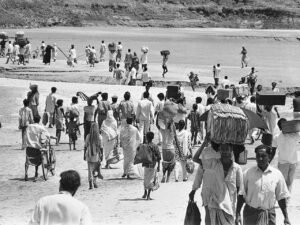
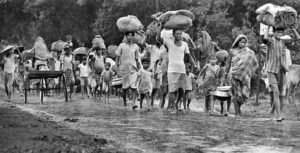
Thirteen months later, on March 25, 1971, Pakistan’s Punjabi-dominated army launched Operation Searchlight, a calculated campaign of mass violence against Bengali Muslims. Dhaka University was attacked, intellectuals were systematically eliminated, Hindus were targeted as alleged Indian agents, and women were subjected to widespread sexual violence. Casualty figures remain disputed. Bangladesh cites three million deaths, while independent scholars estimate between 300,000 and 500,000. Yet there is no dispute that this was among the most horrific atrocities of the twentieth century. Ten million refugees fled into India, and by December 1971 Indian intervention culminated in the fall of Dhaka. Pakistan was split in two. Bhutto inherited a mutilated state, its economy shattered by war and its claim of Islamic unity exposed as a hollow slogan.
The Myth of Islamic Unity
The massacre of Bengali Muslims by a self-proclaimed Islamic army revealed Pakistan’s foundational crisis. A narrow Punjabi military elite treated the state as private property, masking ethnic, regional, and economic exploitation behind the rhetoric of religious fraternity. East Pakistan, home to the fertile Ganges-Brahmaputra delta and responsible for nearly seventy percent of exports, was stripped of its wealth to finance industrial growth in the west. Despite being the demographic majority, Bengalis received minimal development spending. This was economic colonialism dressed up as Islamic brotherhood, a pattern repeated today in the extraction of Balochistan’s gas and minerals.
The Abandoned Loyalists
The tragedy was compounded by the fate of Bihari Muslims, Urdu-speaking migrants from India’s Bihar region who had settled in East Pakistan after Partition in 1947. Many remained loyal to the Pakistani state and collaborated with the army during the war, forming militias such as the Razakars to suppress Bengali nationalists. After Bangladesh’s independence, they became targets of retribution and were rendered stateless. In 2025, nearly 300,000 Biharis remain confined to around seventy overcrowded camps across Bangladesh. They face entrenched discrimination and limited access to education, employment, and basic services. Although a 2008 court ruling granted citizenship to those born after 1971, the older generation remains trapped in legal and social limbo, their camps symbols of prolonged neglect.
Selective Islamism and Moral Evasion
Here, Pakistan’s moral duplicity becomes impossible to ignore. Islamabad repeatedly invokes the suffering of Kashmiri Muslims in international forums, presenting itself as a guardian of Muslim solidarity. Yet this posture collapses when confronted with the Biharis’ demand for repatriation. Agreements in 1974 repatriated only about 170,000 people. An OIC-backed effort in 1988 failed in implementation. The final intake occurred in 1993, when just 321 individuals were accepted. Domestic political calculations, particularly fears of demographic shifts in Sindh, hardened official apathy. Pakistan’s ruling elite consistently chose geopolitical posturing over humanitarian responsibility.
 An Economy Designed to Exclude
Viewed from Delhi in December 2025, Pakistan appears trapped in an unchanging script. The economy teeters on the edge of collapse. The rupee, valued at eleven to the dollar at the time of Bhutto’s execution, now hovers around 280. Public debt exceeds eighty trillion rupees. Debt servicing and defense absorb most public spending. Industrial elites receive repeated loan waivers, while the power sector’s circular debt grows unchecked. In gas-rich regions, the poor burn dung for fuel as national resources light distant cities.
Balochistan: Extraction Without Belonging
Balochistan is in open turmoil. In 2025 the insurgency intensified sharply. Attacks on trains, railway infrastructure, and public spaces reflected deepening alienation. Enforced disappearances have returned as a normalized instrument of control. The China-Pakistan Economic Corridor functions largely as an extractive framework. Minerals and fisheries flow outward, while local communities remain without electricity, clean water, or meaningful employment.
Caste, Faith, and Social Hierarchy
In Sindh, hereditary landlords dominate bonded sharecroppers under the cover of religious lineage. In Punjab, entrenched hierarchies persist behind modern façades. Villages openly restrict mosques by caste. Mussalis and Christian sanitation workers face routine exclusion. The rise of sectarian movements draws strength from these inequalities, where religious identity is deployed to reinforce social stratification rather than challenge it.
Politics Without Accountability
The political system offers no corrective. Leaders operate from exile, prison, or under military supervision. The armed forces continue to expand their commercial empire while the country seeks repeated IMF bailouts. Each program imposes austerity on the same segments of society. Rising fuel, electricity, and food prices fall upon those who never benefited from state patronage.
The Continuity of 1971
Religious authorities who once mobilized for doctrinal dominance remain silent when Pasmanda Muslims are killed over caste identities. In Thar and Lyari, centuries-old hierarchies endure. The genocide of 1971 revealed the fiction of Islamic unity as a mask for elite domination. Today, Baloch, Sindhi, Saraiki, Hindko speakers, Biharis, Sheedis, and others continue to experience similar patterns of marginalization.
No Saviors Left
From across the Wagah border, the conclusion is unavoidable. Pakistan will not escape this cycle by awaiting another savior in uniform or civilian attire. No leader sustained by this system will dismantle it. Change, if it comes, will arise only when the excluded decide that endurance has reached its limit.
Until then, the blood of 1971 and the violence of the present narrate the same truth: a state that treats its own people as enemies.
 Shariq Adeeb Ansari
National Working President
All India Pasmanda Muslim Mahaz
Email: s.adeebansari@gmail.com